Unified Ottimate
Designing a scalable platform foundation to unify navigation, workflows, and future AI experiences across Ottimate’s product suite.


The Problem
How might we unify Ottimate into one scalable platform—reducing cross-module friction while enabling role-based personalization over time?
As Ottimate expanded into multiple products, workflows began to require frequent context switching. Inconsistent navigation and patterns increased cognitive load and made the platform feel fragmented—reducing discoverability, trust, and efficiency.
Role
Product Designer — drove information architecture research, navigation concepts, home/workbench direction, and cross-module workflow standards in partnership with Product + Engineering.
Process Highlights
1. Aligned on the north star and project scope
Partnered with the Head of Product (exec sponsor) to define what “Unified Ottimate” means, what success looks like, and what’s in/out for the first phase—so design and engineering could move forward with a shared direction to be presented at Otticon, our all-hands offsite.
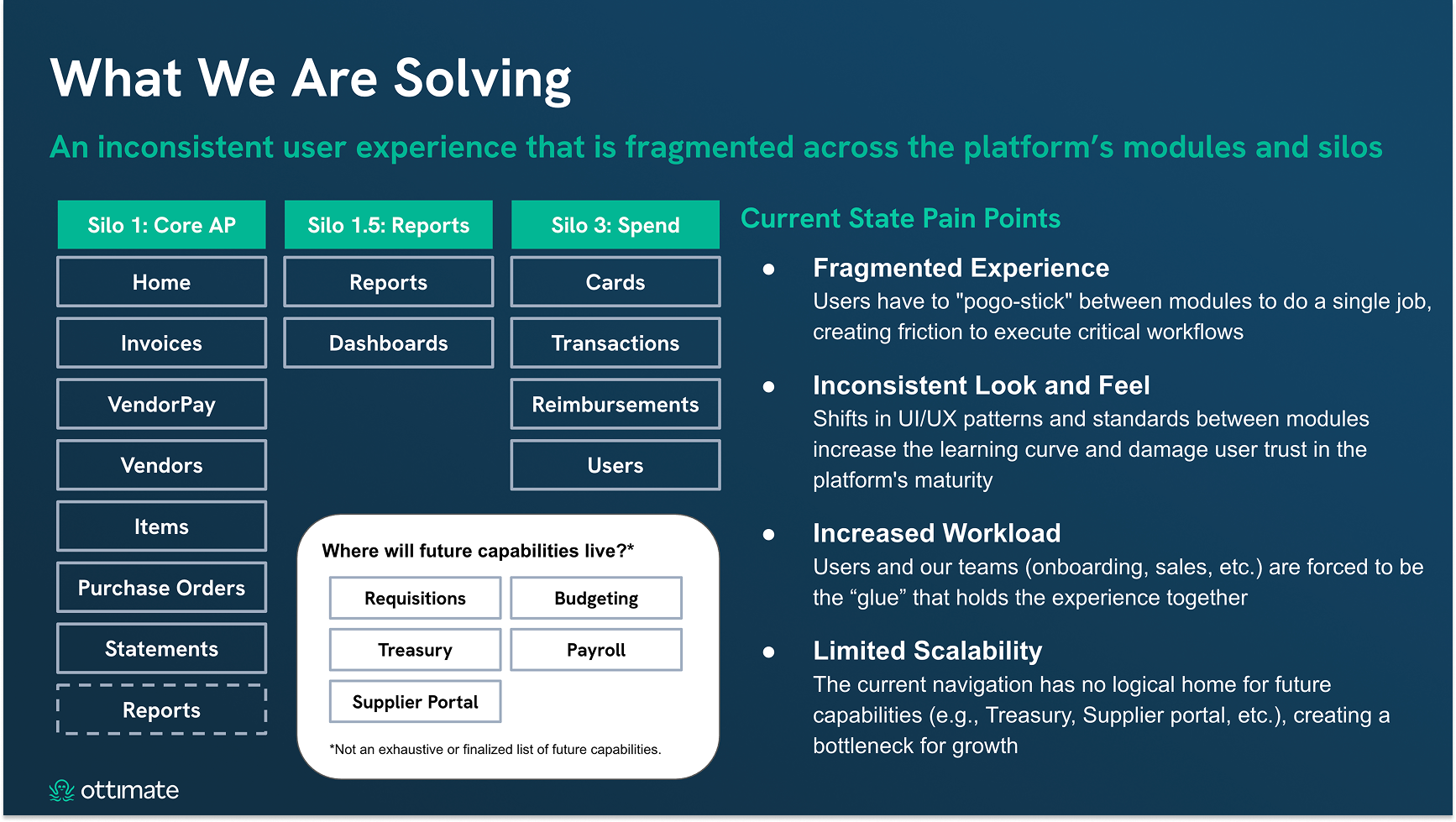
2. Diagnosed the fragmentation (current-state assessment)
Audited the existing navigation and cross-product flows to pinpoint where users were forced to context switch, re-learn patterns, or lose progress while completing core finance workflows.
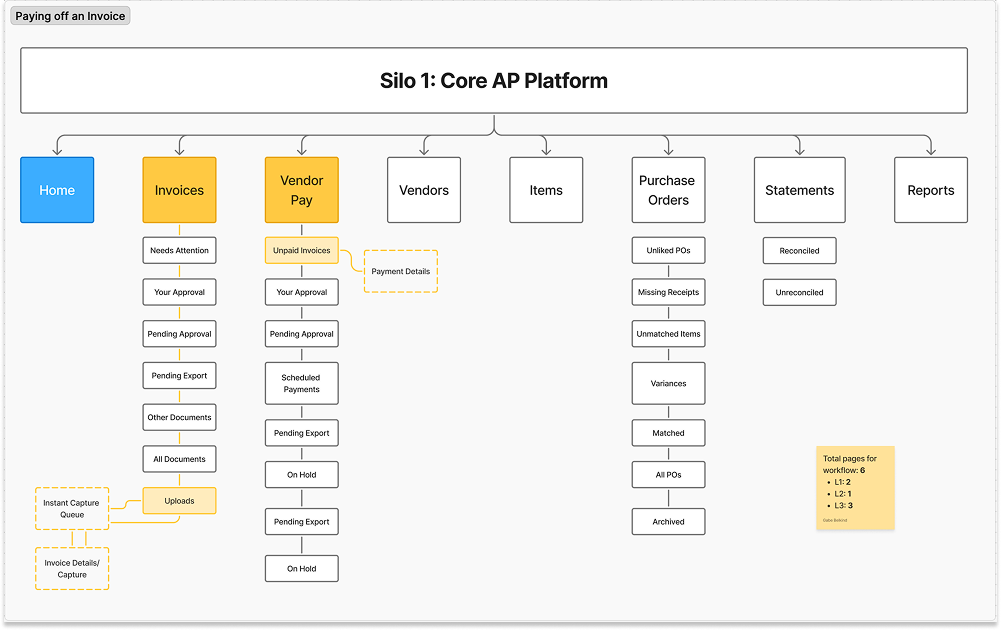
3. Grounded the problem in evidence (user and internal signals)
Synthesized NPS analysis, support feedback, and stakeholder input, surfacing consistent themes:
• Core workflows frequently broke across product boundaries, forcing users to leave their task to find context elsewhere.
• Inconsistent navigation and patterns increased cognitive load and reduced trust in the platform’s maturity.
• As new modules were added, the existing structure showed clear limits to scalability.
• Inconsistent navigation and patterns increased cognitive load and reduced trust in the platform’s maturity.
• As new modules were added, the existing structure showed clear limits to scalability.
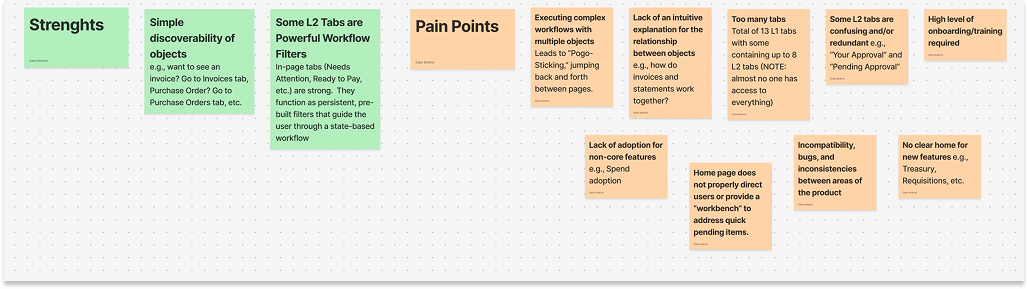
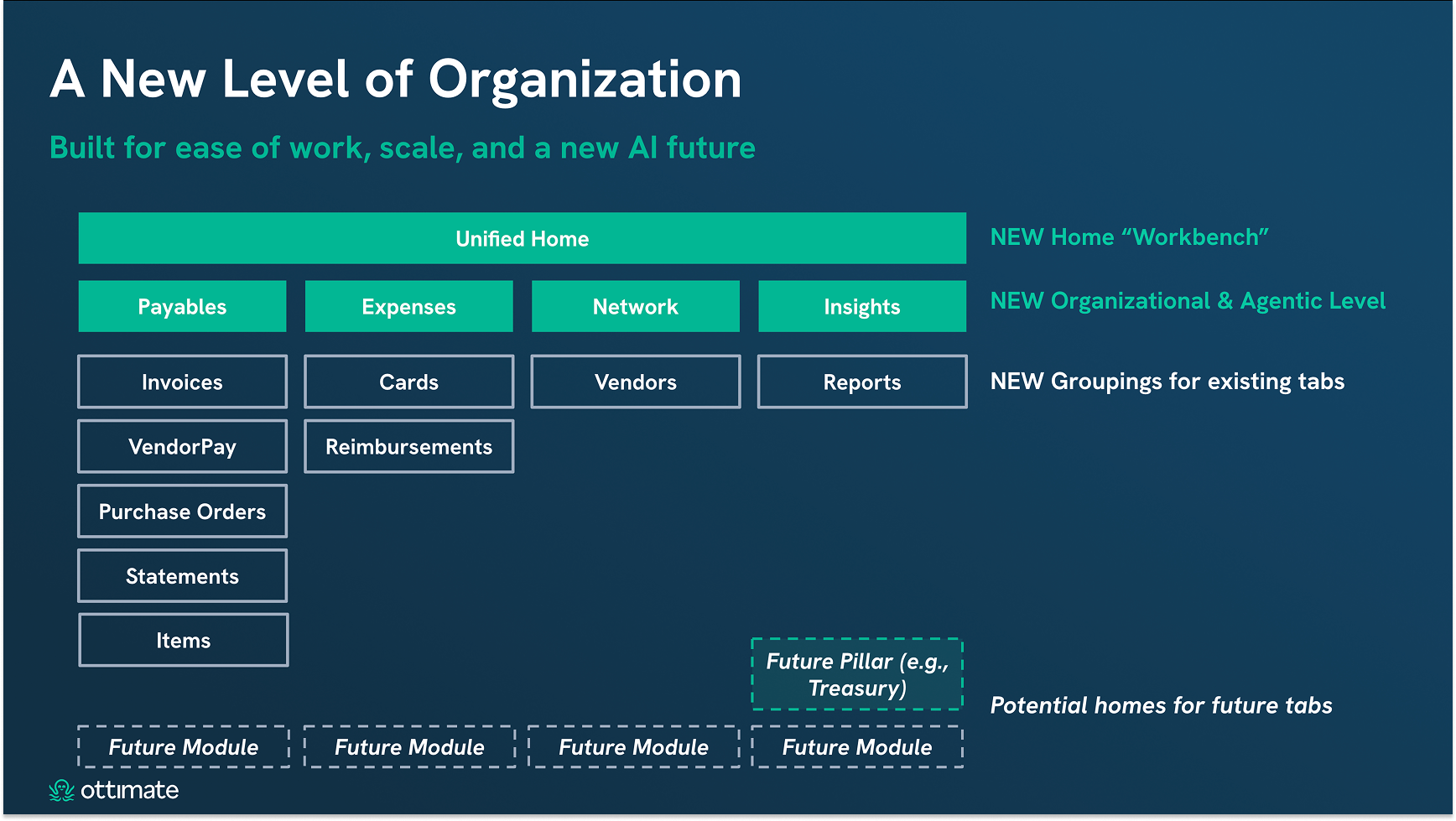
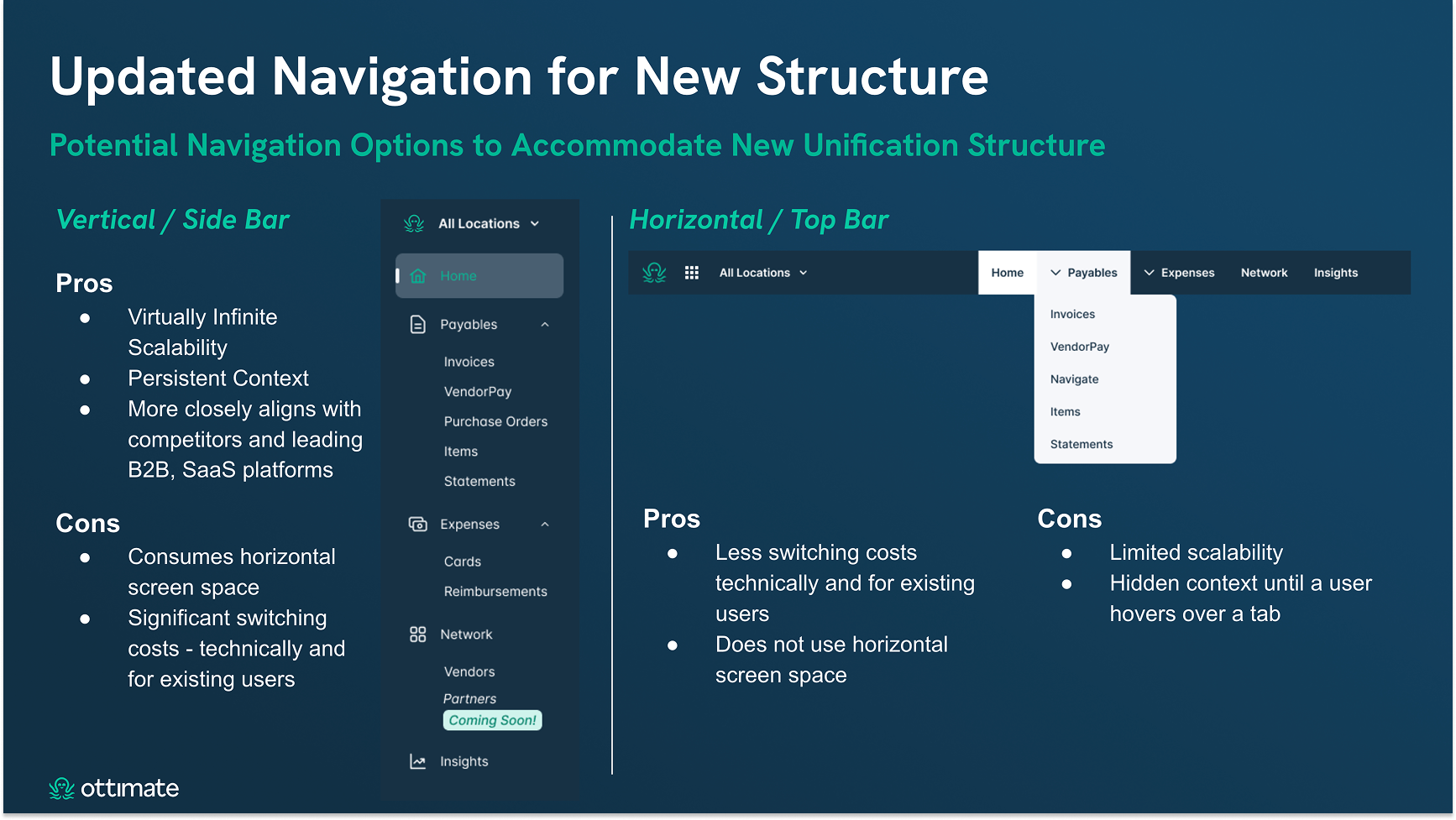
4. Framed key tradeoffs for a unified information architecture and the UI implications for navigation
Developed a draft IA that groups experiences in a way that matches user workflows, while leaving room for future modules to slot in cleanly.
5. Designed the unified Workbench (homepage direction)
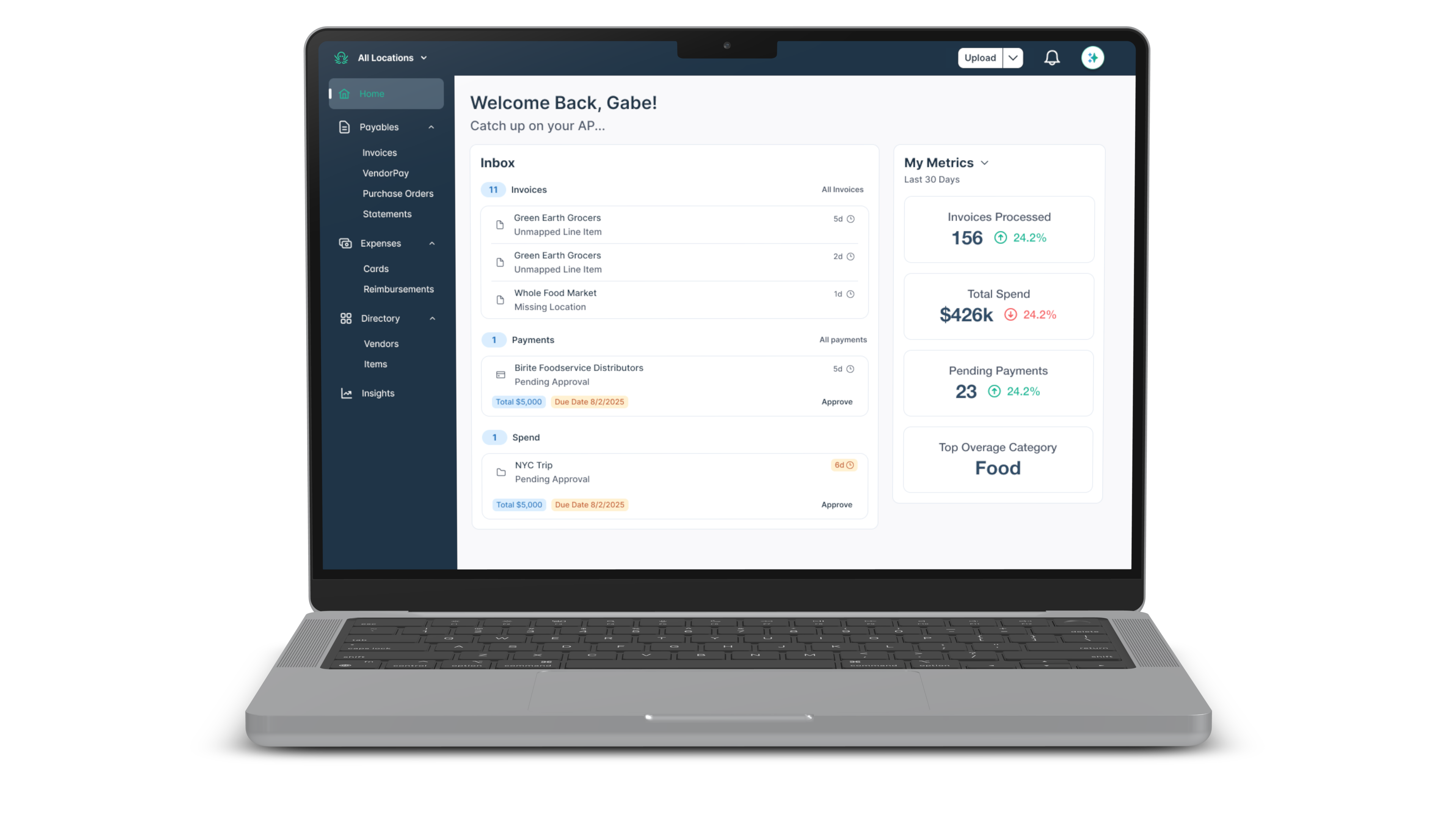
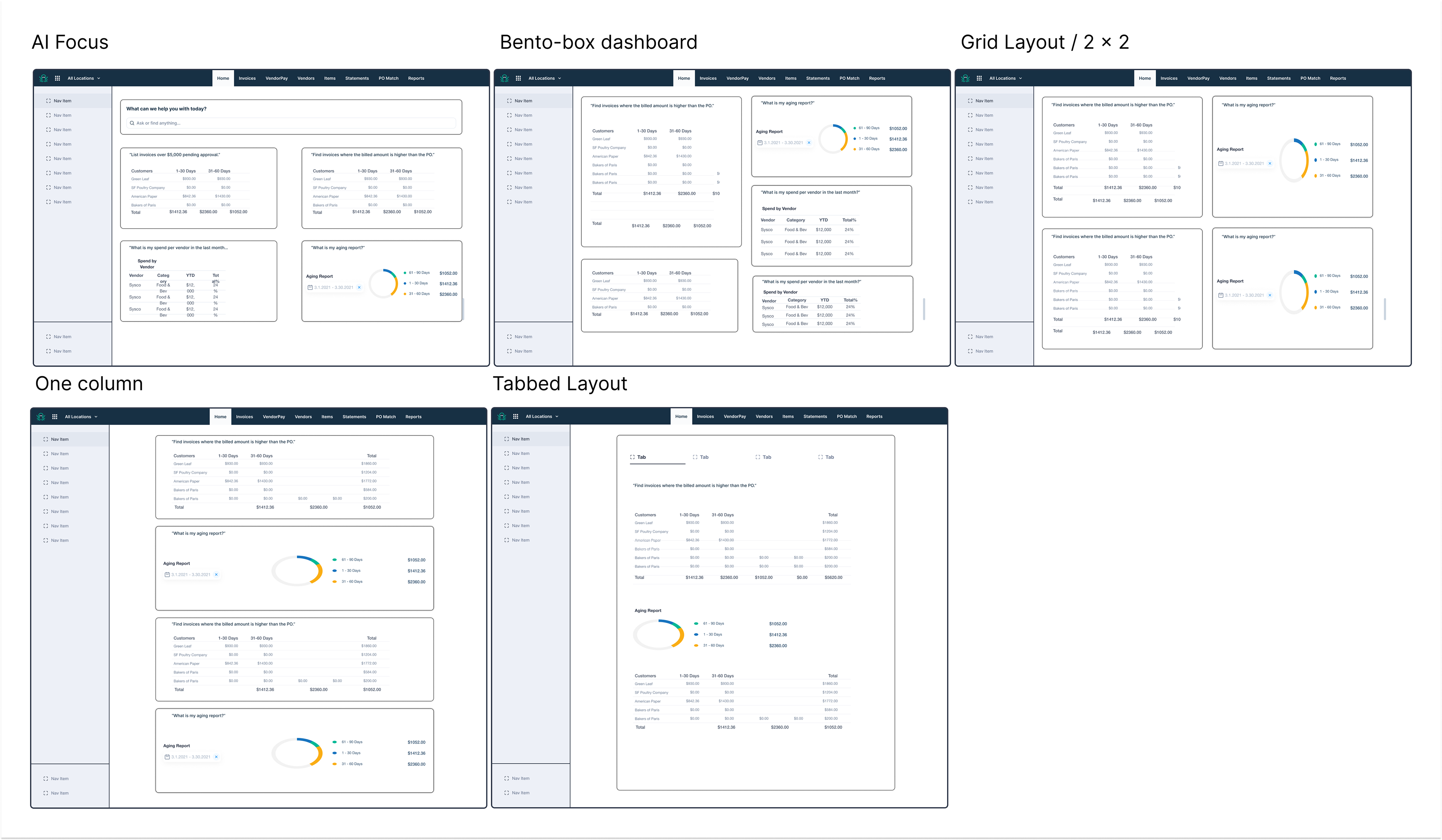
Through iterative wire-framing, designed high-level home pages concept for a role-aware workspace—prioritizing high-frequency actions and surfacing the right level of information at the right time from across the product into a unified inbox.
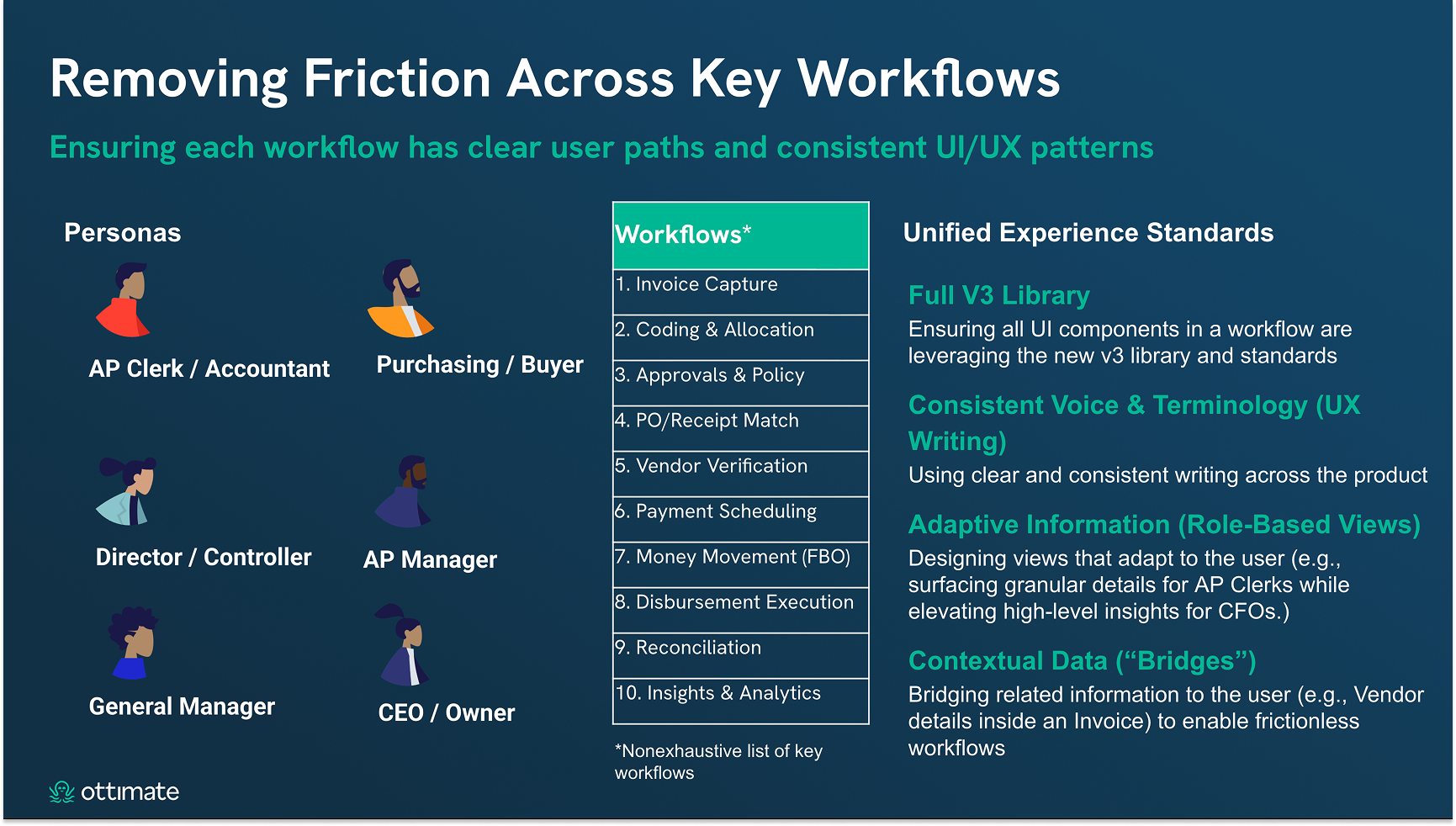
6. Established unified experience standards across platform personas and workflows
Documented shared standards for UI patterns, terminology, and UX writing—so the platform feels cohesive, intuitive, and mature as it scales.
7. Socialized, iterated, and built alignment
Ran iterative reviews with Product, Design, and Engineering—using the framework and visuals to align on tradeoffs, de-risk the approach, and set up the next phase: a detailed implementation plan.
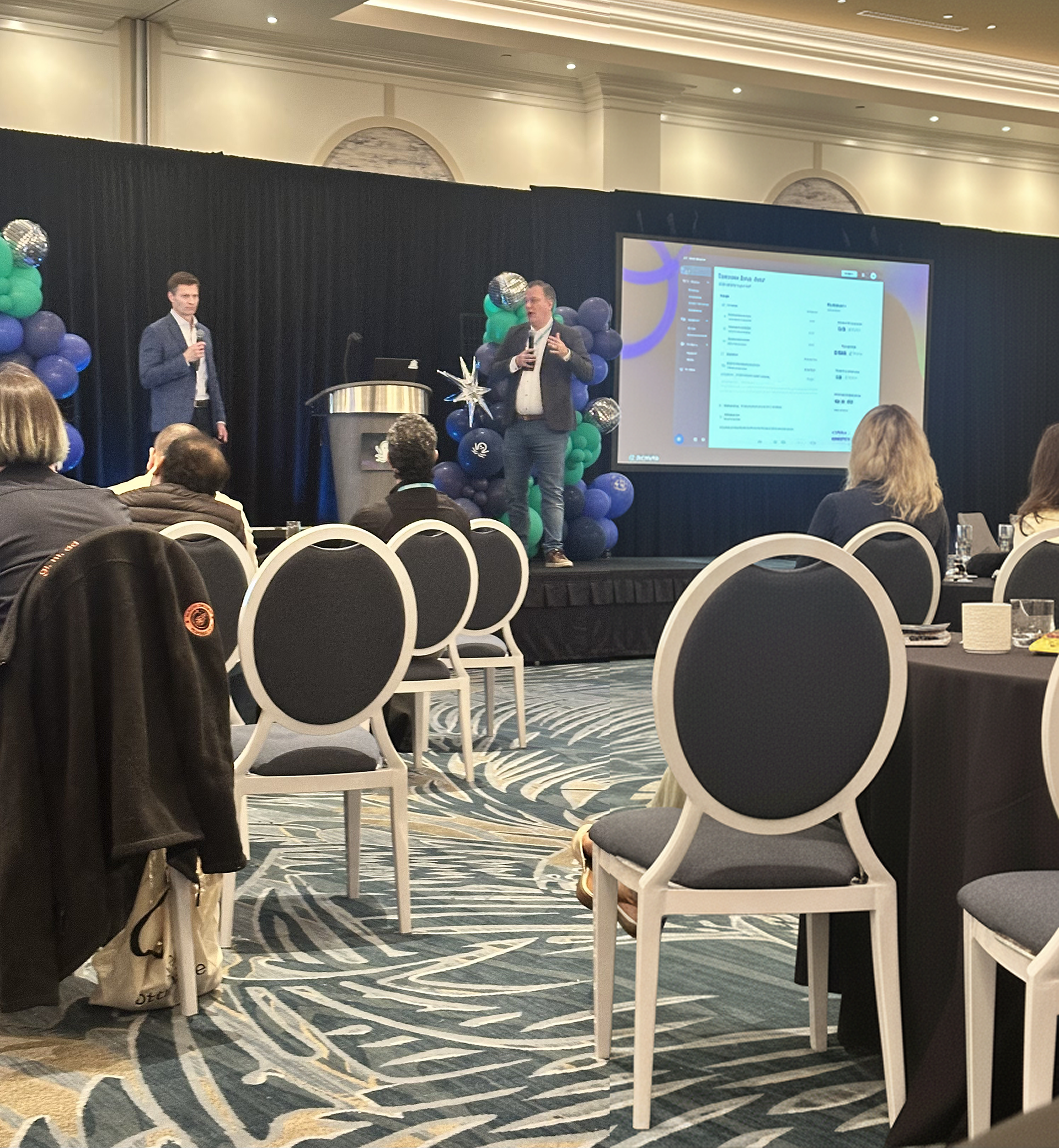
To make the vision tangible, I created a short animation illustrating how a unified inbox could act as a shared system across Ottimate—powering in-product notifications and extending into external surfaces like a Slack bot. The concept was later presented by our CEO and Chief Product Officer at our January 2026 all-hands, reinforcing it as a company-wide vision.

Results
Company-wide Alignment
Unified Ottimate was presented at the January 2026 all-hands, aligning over 200 employees on a common vision and language for unifying the platform—creating clarity on where the product is headed and what needs to happen next.
Challenges
• Long-term priorities vs. near-term builds: Aligning a multi-quarter unification effort with short-term feature delivery required clear framing around sequencing, dependencies, and what could be delivered incrementally without losing the long-term thread.
• Consensus across teams with different incentives: Building consensus on sequencing across teams with different incentives (e.g., Platform stability vs. reducing experience debt).
Lessons learned
• Universal Design enables Personalization: We often debate "Standardization vs. Personalization," but the best products are able to balance the tradeoffs of both approaches.
• The power of metaphors: Shifting the language to recognizable themes and visuals helped the entire organization better understand and rally around the vision.